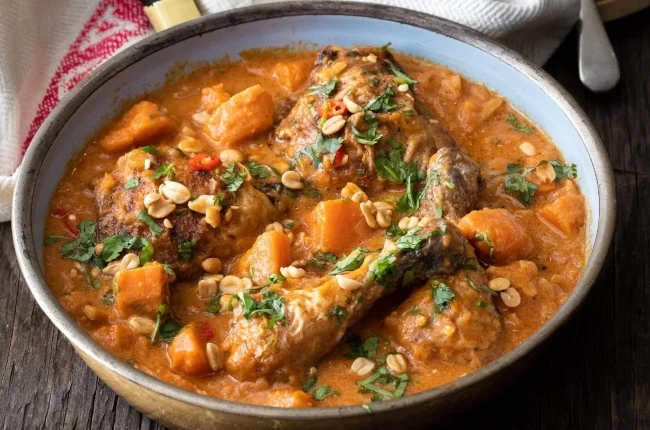

If you’re looking for a rich, flavorful African chicken dish, hardbody chicken stew is one of the most authentic meals you can make.
Unlike regular supermarket chicken, hardbody chicken comes from free-range village chickens that grow naturally and develop deeper flavor. The meat is firmer and takes longer to cook, but the result is a bold, comforting stew that is incredibly satisfying.
Across countries like South Africa, Zimbabwe, and Nigeria, hardbody chicken is often served at family gatherings, Sunday meals, and special occasions.
Slow-simmered with tomatoes, spices, garlic, and ginger, this traditional stew creates a deeply savory sauce that pairs perfectly with pap, rice, or dumplings.
✔ Rich, authentic African flavor
✔ Perfect comfort food
✔ High in protein and natural ingredients
✔ Great for family meals or special occasions
✔ Tastes even better the next day
Hardbody chicken, sometimes called village chicken, refers to free-range chickens that are allowed to grow naturally instead of being raised quickly like commercial broiler chickens.
Because they move around more and grow slower, the meat becomes:
In many African homes, hardbody chicken is preferred because it creates richer stews and soups.
Hardbody chicken is naturally tougher, so the first step is to boil it.
Place the chicken in a pot with:
Add water and boil for 40–60 minutes until the chicken begins to soften.
Save the broth — it will add amazing flavor to your stew.
Heat cooking oil in a large pot.
Lightly brown the boiled chicken pieces for 5–7 minutes to develop a rich color and deeper flavor.
Remove and set aside.
In the same pot sauté:
Cook until fragrant.
Add:
Let everything cook for 5–8 minutes until the sauce thickens.
Return the chicken to the pot.
Add:
Cover and simmer for 30–40 minutes until the sauce becomes thick and the chicken is tender.
This stew pairs perfectly with many African staples, including:
Many families in South Africa especially enjoy it with pap and gravy.
🔥 Cook it slowly – Hardbody chicken needs time to become tender.
🔥 Use the broth – The boiling liquid adds amazing flavor to the stew.
🔥 Let it rest – The stew often tastes better after a few hours or even the next day.
Hardbody chickens grow naturally and exercise more, which makes their meat firmer than commercial broiler chickens.
Most recipes require at least 60–90 minutes total cooking time to make the meat tender.
Yes! A pressure cooker can reduce cooking time to 25–35 minutes.
Hardbody chicken stew is one of the most authentic and comforting African meals you can cook. The slow cooking process brings out deep flavors that make every bite rich and satisfying.
If you’ve never tried cooking village chicken before, this recipe is a perfect place to start.
Lorem ipsum dolor sit amet consec fusce purus bibendum eget dui dictum quam tristique.